
Drones, Defence, and Civilian Resilience – Observations of drone fishermen and a sense of urgency for New Zealand
On the return leg of a run down Ruakaka beach over Waitangi weekend, I stopped to chat with a drone fisherman who, having ditched his very kiwi kontiki device a couple of years ago, was now on his third fishing drone. What caught my attention me wasn’t the speed with which the drone took off on a 1km round trip and seamlessly returned to base, or the array of squid-bated hooks that were guaranteed to bring in enough snapper to feed his entire family, but the release mechanism on the drone that drops the hooks and sinker on command. I was immediately reminded of the countless drone videos coming out of Ukraine and the amount of damage a small civilian drone with a payload can do in the hands of a bad actor. Whether targeting critical infrastructure, transportation, events, or crowded places, the drone risk in New Zealand is very real. It should be understood and mitigation plans need to be front and centre.
Over the past 24 months, drones have moved from being a tactical military capability to a strategic national security issue. The cost curve has collapsed. Capability has increased. Lessons from overseas conflicts have accelerated development cycles that used to take years into just months.
For New Zealand, this is not theoretical. Cheap, modifiable and modular drones are now accessible to state and non-state actors alike. Worse, they don’t even need to be modified if one uses a fishing drone with a release mechanism. That reality affects government agencies, critical infrastructure operators, stadiums and public venues, the NZDF, NZ Police, and civil society as a whole.
The question is no longer whether drones matter. It is how we organise ourselves to respond.
The Democratisation of Air Power
Small drones can now be assembled or modified at relatively low cost using commercially available components. Open-source designs, hobbyist communities, battlefield adaptation, and rapid prototyping tools have made airborne capability widely accessible.
In practical terms, this flattens the playing field. Capabilities that once required nation state-level funding are now within reach of small groups and individuals. Payload carriage, remote operation, and low-altitude navigation are no longer complex barriers.
This changes risk calculations for:
- Critical infrastructure (energy, utilities, water)
- Public events and mass gatherings
- Maritime and port operations
- Military installations
- Border security
For New Zealand, a geographically isolated nation with significant maritime and critical infrastructure exposure, this democratisation of air power must be factored into national security planning.
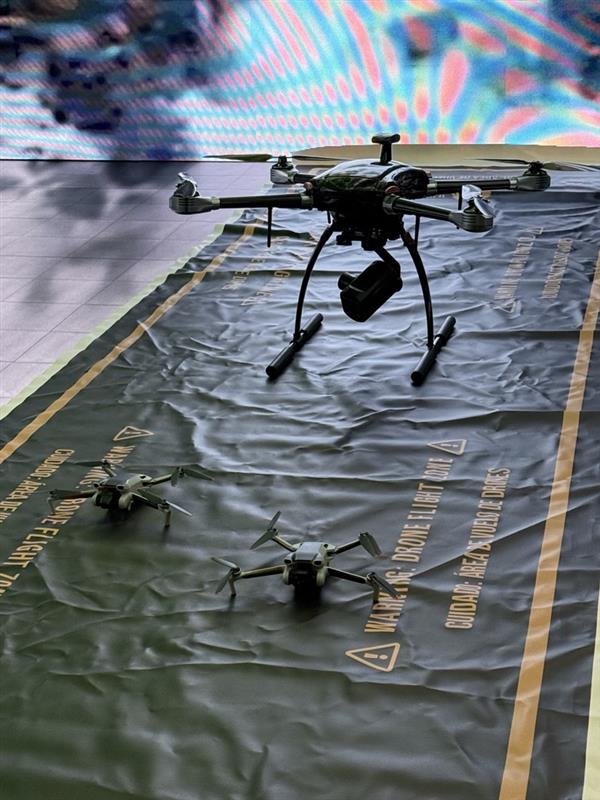
Lessons from Modern Conflict
Recent overseas conflicts, particularly in Ukraine & Russia, have demonstrated how quickly drone tactics evolve. Low-cost drones are used for surveillance, targeting, disruption and precision strikes. Counter-drone systems are deployed, adapted, and refined in near real-time, until these systems are defeated through offense innovations and the cycle repeats.
Two key insights stand out:
- Innovation cycles are measured in months, not years
- Countermeasures must be layered and adaptive
The export of drone systems and tactical knowledge means that these lessons are not contained within one theatre. They are influencing procurement, doctrine and defence planning rapidly and globally.
New Zealand does not need to replicate foreign models, but it does need to actively assess which lessons are relevant to our geography, alliances, and threat profile.
The Emerging Risk to Civilian Infrastructure and Crowded Places
While much discussion focuses on military applications, the more immediate concern for New Zealand may be misuse targeting critical infrastructure and civilian infrastructure.
Drones present credible risks to:
- Airports and aviation safety
- Power generation and transmission assets
- Ports and fuel depots
- Stadiums and major events
- Transport hubs and dense urban environments
- Prison security
- Crowded places and ethnic/religious groups
Drones’ low visibility, manoeuvrability, rapid arrival, and accessibility make them difficult to counter using traditional perimeter-based security models. For crowded places in particular, the challenge is detection and rapid decision-making. The ability to identify a hostile drone early, determine intent, and respond effectively and within legal authority frameworks is critical. Without clear doctrine and coordination, response becomes reactive and fragmented.
What Effective Counter-Drone Strategy Looks Like
A credible response cannot rely on a single technology, agency or security team. It requires layered capability and defined authority.
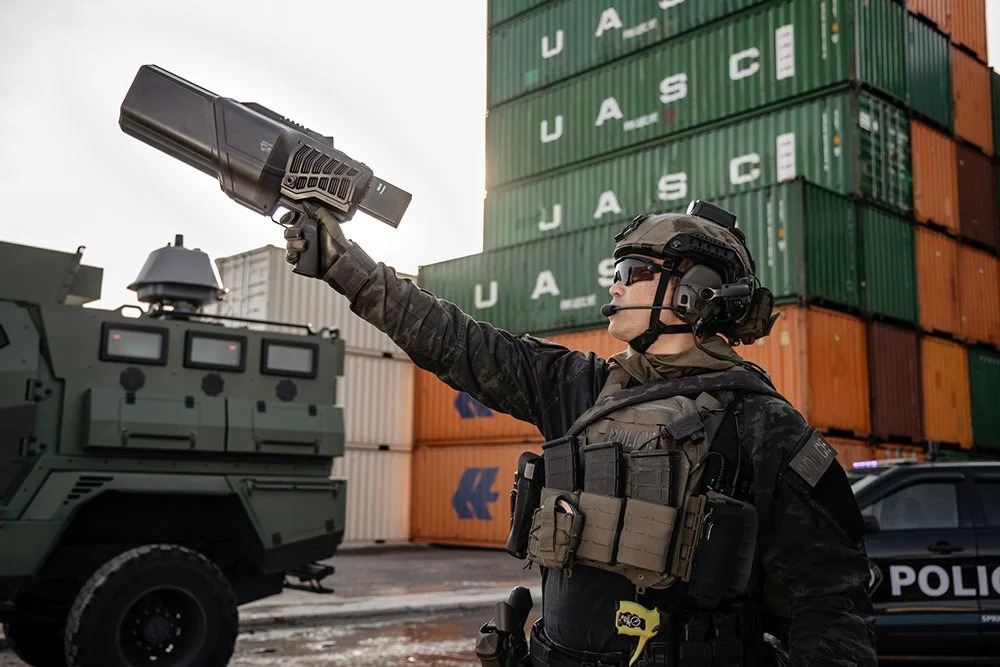
At a strategic level, that means:
- Persistent detection across sensitive airspace
- Clear identification processes to separate benign from hostile activity
- Legal authority and technical means to intervene when required
- Joint training between police, defence, infrastructure operators, and private security personnel
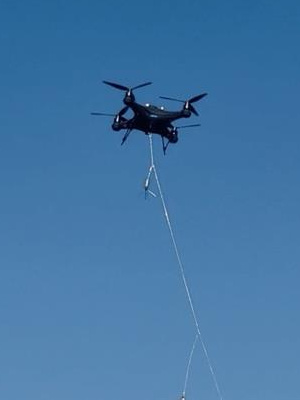
Electronic countermeasures, sensor fusion, interceptor technologies and command-and-control integration are all part of the solution. Equally important is governance clarity. Who makes the call? Under what authority? How quickly?
For infrastructure operators, security managers, and crowded places owners, drone risk must now be embedded into enterprise risk management frameworks, and not treated as an emerging niche issue.
Implications for the NZ Defence Force
For a small military like New Zealand’s, scale is likely less important than agility. The focus could be on:
- Developing tech-literate, adaptable units
- Integrating offensive and defensive drone capability into training
- Leveraging partnerships with Australia and other allies
- Prioritising interoperability and rapid procurement cycles
Investment does not necessarily need to mirror larger powers. Instead, it could prioritise modular, upgradeable systems and strong intelligence integration.
Drone warfare is less about mass and more about speed of adaptation.
A Whole-of-Society Conversation
Drones sit at the intersection of defence, policing, technology and civilian resilience. That makes this a whole-of-society issue.
New Zealand must consider:
- Are current laws fit for purpose when a hostile drone is detected?
- Do infrastructure operators know their responsibilities and escalation pathways?
- Are public venues equipped to detect and respond?
- Are Police/NZDF adequately set up to respond within required timeframes and geographies?
- How can private sector innovation support public security objectives?
Resilience requires collaboration between government, industry, defence and civil society. The technology is accessible.
The response must be coordinated.
The Strategic Bottom Line
The drone era is not emerging. It has arrived.
For New Zealand, the strategic imperative is clear:
- Accept that low-cost airborne capability, with payload capability, is now widely accessible
- Build layered detection and response systems
- Clarify authority and coordination mechanisms
- Train for adaptation, not static scenarios
- Be prepared to have a fluid, agile counter-drone stategy.
Countries that treat drones (UAS and C-UAS) as a niche technical issue will fall behind. Those that integrate drone strategy into national and civilian resilience planning will be better positioned to protect critical infrastructure, public spaces, and national sovereignty.
The time for that integration is now.
Contact Nextro today to discuss the security and operational implications of bad actor drones impacting your critical infrastructure site.
For drones and airports, see Best Practices for Counter-Drone Deployment at Civilian Airports. For stadia and events, see Lessons from the August 2024 Vienna Concert Terror Plot: Security Strategies for Large Events & Critical Infrastructure.
For counter-drone solutions, see Droneshield.